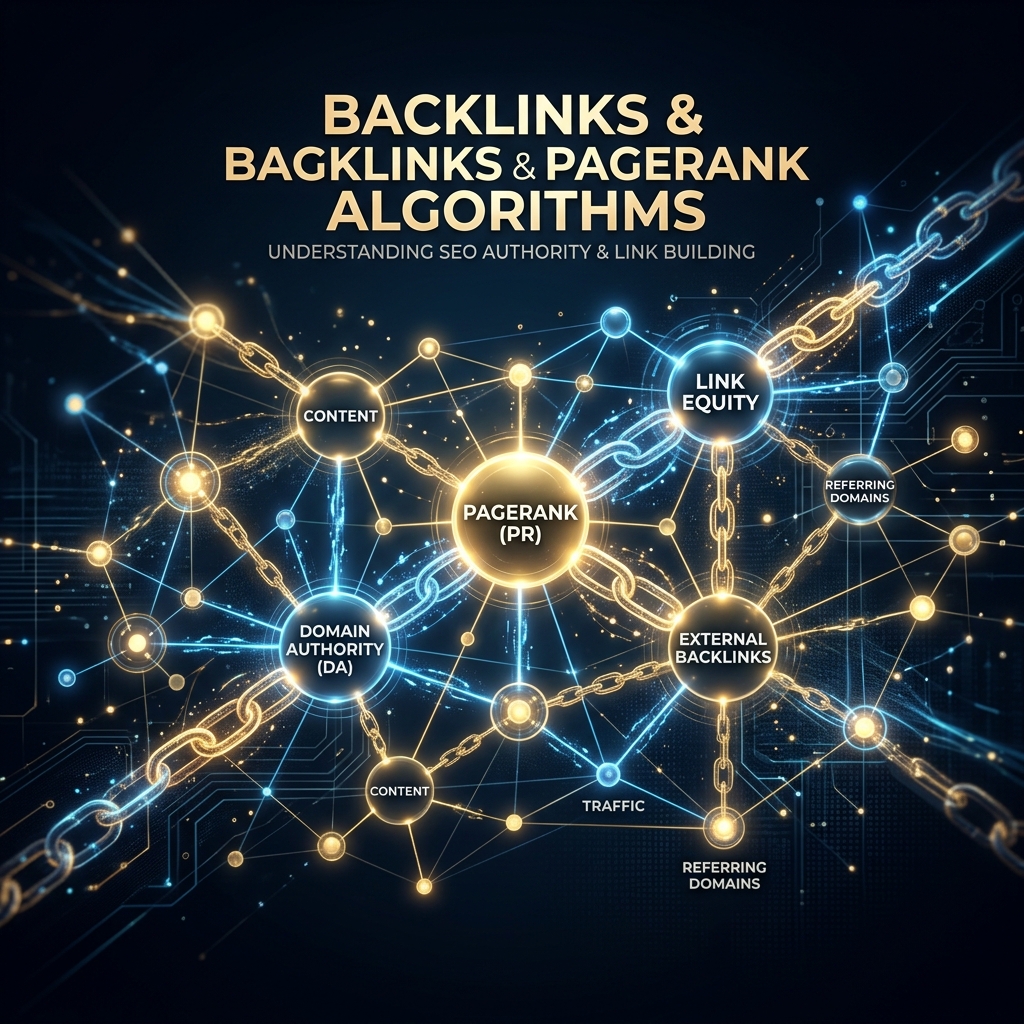
How Backlinks Affect Google Rankings
Google's original breakthrough — the PageRank algorithm, described by Larry Page and Sergey Brin in their 1998 Stanford paper "The Anatomy of a Large-Scale Hypertextual Web Search Engine" — was built on one insight: a link from one page to another is a vote. Pages that receive more votes from trusted pages are more likely to be authoritative on their topic. Two and a half decades later, backlinks remain one of Google's most powerful ranking signals.
In a 2016 public Q&A, Google was asked directly what its top ranking factors were. Search Quality Senior Strategist Andrey Lipattsev answered:
"It is content. And it's links pointing to your site."
— Andrey Lipattsev, Google Search Quality Senior Strategist, reported in Search Engine Land (2016)
The third factor named in that same Q&A was RankBrain, Google's machine learning system. While the algorithm has grown dramatically more sophisticated since then — with hundreds of signals and machine learning at its core — there is no evidence that backlinks have decreased in importance. Sites with strong link profiles consistently outrank those without them, all else being equal.
The mechanism works like this: when a high-authority page links to your page, some of that page's PageRank flows through the link to your page. Your page then distributes that authority through its own outbound links. This creates a web of authority flow across the internet — pages that receive links from many high-authority sources accumulate ranking power that's very difficult to replicate with on-page optimization alone.
What Makes a Backlink High Quality
Not all backlinks are created equal. A single link from a relevant, authoritative domain can outweigh hundreds of links from low-quality sites. The factors that determine link quality:
Domain Authority and Page Authority
Links from high-authority domains carry more PageRank. A link from a major news publication, a well-established industry resource, or a .edu/.gov domain is far more valuable than a link from a newly registered blog with no traffic. Tools like Moz Domain Authority (DA), Ahrefs Domain Rating (DR), and Semrush Authority Score provide proxy measures — note these are third-party estimates, not Google metrics.
Topical Relevance
A backlink from a site covering the same topic or industry as yours carries more relevance signal than a link from an unrelated site. Google's algorithms understand topical relationships — a link from an SEO publication to an SEO tool carries more weight than the same link from a cooking blog. Both count, but relevance amplifies the signal.
Link Placement and Editorial Context
- In-content links are most valuable. A link embedded naturally within body text, where a human editor chose to reference your page, is the gold standard.
- Footer and sidebar links carry less weight. Links in navigation areas appear on every page of a site — they look more like advertising than editorial endorsement.
- Image links pass PageRank but not anchor text. The alt attribute of the image serves as the anchor text signal.
Anchor Text
Anchor text is the visible, clickable text of a hyperlink. It provides a topical signal to Google about the content of the linked page. The types of anchor text and their role:
| Type | Example | Notes |
|---|---|---|
| Exact match | "technical SEO audit" | Strong relevance signal; over-use triggers spam filters |
| Partial match | "SEO audit tool for agencies" | Balanced — relevant but natural |
| Branded | "SearchVitals" | Essential for trust; most natural anchor type |
| Naked URL | "searchvitals.com" | Common in citations and directories |
| Generic | "click here", "learn more" | No relevance signal; natural to have some |
| Image alt text | alt="SearchVitals dashboard screenshot" | Alt text acts as anchor for image links |
If the majority of your backlinks use the same exact-match keyword as anchor text, it's a signal that links were acquired artificially. Google's Penguin algorithm specifically targets this pattern. A natural link profile has a diverse mix of branded, generic, URL, and keyword-rich anchors.
Dofollow vs Nofollow Links
A rel="nofollow" attribute on a link tells search engines not to follow it or pass PageRank through it. Originally, nofollow links were considered worthless for SEO. In a September 2019 announcement, Google updated its stance: nofollow is now a hint rather than a directive, and Google may choose to follow nofollow links and count them as signals.
Two additional link attributes were also introduced:
rel="sponsored"— for paid links or advertisementsrel="ugc"— for user-generated content like comments and forum posts
In practice: dofollow links from authoritative relevant sites remain the most valuable. Nofollow links from high-authority sites (Wikipedia, major publications) still drive referral traffic and provide brand signals. A mix of both is natural; an all-dofollow profile can look manipulated.
Link Building Strategies That Work
Digital PR and Original Research
Creating original data — surveys, studies, analyses of publicly available datasets — gives journalists and bloggers something to cite. A piece of original research that produces a surprising or counterintuitive finding will earn links naturally from industry publications that cover the topic. This is the highest-leverage link building strategy for SaaS and content businesses.
Content Partnerships and Guest Posts
Writing a guest post for a relevant industry publication places your content (and a link) in front of an established audience. The quality bar matters enormously — low-quality guest posts on low-authority sites produce near-zero ranking benefit and can signal manipulation if done at scale. Target publications your customers actually read.
Broken Link Building
Find pages in your industry that link to resources that no longer exist (404 errors). Create a replacement resource (or identify an existing one) and reach out to the linking page's owner to suggest updating the broken link to point to your resource. This offers genuine value to the recipient — fixing a broken link benefits their users — which improves response rates.
Resource Page Link Building
Many websites maintain curated lists of resources — "best tools for X", "recommended reading on Y". If your content or tool belongs on those lists, a targeted outreach email explaining why your resource fits is often sufficient. The key is genuine relevance: if your tool is actually useful to that page's audience, response rates are much higher.
Competitor Backlink Gap Analysis
Tools like Ahrefs and Semrush allow you to compare your backlink profile against competitors'. Sites that link to multiple competitors but not to you represent an opportunity — they've already demonstrated willingness to link to resources in your category. Reach out with a specific reason why your content or tool would benefit their readers.
Unlinked Brand Mentions
Sites that mention your brand, product, or content by name without linking to you are easy link prospects. They've already demonstrated awareness and enough regard to mention you — converting a mention to a link typically requires only a brief, polite email.
Evaluating Your Link Profile
Periodic link profile audits identify toxic links, anchor text imbalances, and opportunities. Key things to assess:
- Total referring domains (not total links). 100 links from 100 different domains is far more valuable than 100 links from the same domain. Track referring domain growth as your primary backlink KPI.
- Domain authority distribution. What percentage of your links come from high-DA/DR domains? A profile dominated by low-authority sites provides little ranking benefit.
- Anchor text distribution. Is the ratio of branded : generic : keyword-rich anchors natural? A profile where 80% of anchors are exact-match keywords is a manipulation signal.
- Link velocity. A sudden spike in backlinks can look unnatural. Steady organic growth over time looks natural. Rapid link acquisition after a deliberate campaign is normal — a spike with no corresponding content or PR activity is suspicious.
- Toxic or spammy links. Links from link farms, private blog networks (PBNs), or irrelevant foreign-language sites with no traffic can be harmful. Google's disavow tool allows you to tell Google to ignore specific links — use it only for clearly harmful links, as excessive disavowing can hurt more than help.
Backlinks and AI Citation Signals
As AI answer engines become a significant traffic source, the connection between backlink authority and AI citation is worth understanding. AI systems that retrieve content for answers generally favor content from authoritative sources — and domain authority, built partly through backlinks, is a signal those systems use when evaluating source credibility.
There's also a feedback loop: being cited by an authoritative AI-generated answer often drives referral traffic to your page, which can attract additional backlinks from users who discover your content through AI answers.
What Doesn't Work (and Can Hurt)
- Buying links. Paid links that pass PageRank violate Google's guidelines. Google has sophisticated detection — patterns of paid links look different from organic editorial links. Penalties range from link devaluation to manual actions that drop rankings significantly.
- Private blog networks (PBNs). Networks of sites created specifically to sell links. Google's systems are increasingly effective at identifying and devaluing these.
- Exact-match anchor text at scale. Acquiring many links with identical keyword-rich anchors is a manipulation signal regardless of the source quality.
- Comment and forum spam. Low-quality links from blog comments and forum posts are typically nofollow and provide minimal value. Bulk link dropping is a negative signal.
- Link exchanges. "I'll link to you if you link to me" arrangements are explicitly covered in Google's spam policies documentation. Reciprocal linking at scale is detectable and penalized.